All recipesBeef / Weekend Projects

Smoked Chuck Roast French Dip Sandwiches

Cuisine: American

Chuck roast gets a 450°F smoker sear, then a covered 325°F finish in seasoned beef broth. Pile the tender beef onto toasted French rolls with sautéed onions and provolone, and serve the rich au jus alongside.

Jump to recipe
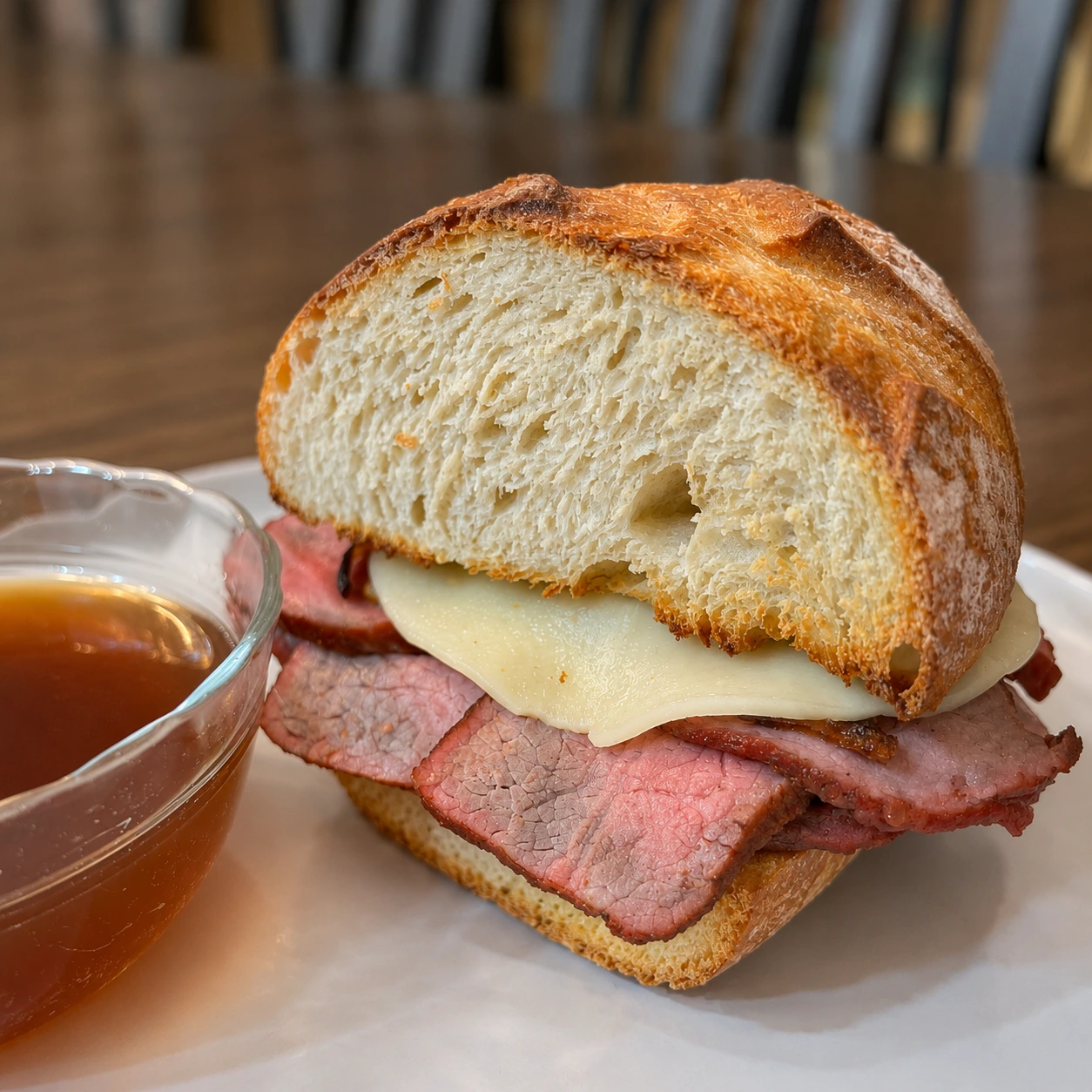
Chuck roast French dip sandwich with sliced beef and provolone on French bread beside a glass bowl of au jus
PREP20 minCOOK3–4½ hrREST20–30 minMAKES6 sandwiches
A weekend smoker cook with built-in dipping jus

Does this cook fit your day?

About 40–50 min hands-on · 3 hr 40 min–5 hr 20 min total

Most of the cook is a covered finish. Sauté the onions near the end, then strain the jus while the beef rests and assemble just before serving.

Hands-on time is an estimate for the original batch, including prep and finishing. Total time includes cooking and resting. Larger batches can take longer.
First time? Start here

Plan for a tenderness window, not an exact finish time. Chuck roast can need more time than expected; keep it covered with enough broth.

Cooking terms explained
Use the equipment you have

A smoker, tightly covered metal pan or Dutch oven, skillet, and thermometer handle the cook. An oven broiler gives the rolls a quick toast and melts the cheese.

Before you shop

Chuck roast makes six hearty sandwiches without needing prime rib. French rolls, onions, and broth round out the meal.

Make it a meal

Serve one sandwich per person with hot au jus in a separate bowl. Chips, a green salad, or roasted vegetables make easy sides.

LET’S COOK

Step-by-step instructions.

YOUR FINISH LINEProbe-tender chuck, often 195–205°F; begin checking tenderness around 190°F
  1. Preheat and season the chuck roast

    • Preheat the smoker or pellet grill to 450°F with the lid closed. Pat the roast dry and coat lightly with olive oil. Mix the roast salt, pepper, garlic powder, and onion powder, then season every side.
    • Use chuck roast for this recipe, allowing several hours for the connective tissue to soften. Time varies with thickness and the individual roast.
  2. Sear at 450°F

    • Place the roast directly on clean grill grates and cook at 450°F for approximately 15–25 minutes total, turning halfway through, until the outside develops a deep brown crust. Watch closely for flare-ups and move away from hot spots as needed.
    • A pellet grill may brown more gently than a direct-flame grill. Judge the crust by appearance rather than extending this stage until the meat dries out.
  3. Lower to 325°F and finish covered

    • While the roast browns, combine the beef broth, Worcestershire sauce, thyme, smashed garlic, and bay leaf in a Dutch oven or deep smoker-safe metal roasting pan.
    • Reduce the smoker to 325°F. Transfer the browned roast into the broth; liquid should come roughly one-third to halfway up the meat, not submerge it. Adjust pan size or broth as needed. Cover tightly with a lid or foil and return to the smoker.
    • Cook for about 2½–4 hours, checking after 2 hours. Add hot broth if the pan becomes low. Begin checking tenderness around 190°F; the roast is ready when a probe slides into the thickest part with little resistance, often around 195–205°F. Temperature is a guide, not a substitute for tenderness.
  4. Sauté the onions near the end of the cook

    • When the roast is approaching tenderness, melt the butter in a large skillet over medium heat. Add the sliced onions and ¼ teaspoon salt.
    • Cook for 20–25 minutes, stirring regularly, until softened and golden. Reduce the heat if they brown too quickly, and add a splash of water to loosen any browned bits. Keep warm.
  5. Rest the beef and finish the au jus

    • Move the tender roast to a board, loosely tent, and rest for 20–30 minutes.
    • Strain the cooking liquid into a saucepan, discarding the bay leaf and garlic. Skim excess fat. Simmer for 5–10 minutes if it needs more concentration, or dilute with broth or water if too salty. Taste before adding any extra seasoning. Reserve about ½ cup for moistening the beef and serve the remaining jus hot for dipping.
    • Slice the roast thinly across the grain, changing direction where muscle seams change. If very tender pieces fall apart, use them as pulled beef. Toss gently with the reserved jus.
  6. Toast, assemble, and melt the cheese

    • Toast the split rolls cut-side up under an oven broiler for 1–2 minutes, watching constantly. Divide the warm beef among the bottom halves and top with sautéed onions and provolone.
    • Broil the open sandwiches for another 1–2 minutes, just until the cheese melts. Keep the top rolls out during this step so they do not burn. Alternatively, melt the cheese on a tray in the covered smoker at 325°F for about 5–10 minutes.
  7. Serve with au jus

    • Close the sandwiches and serve immediately with individual bowls of hot au jus. Dip as you eat to keep the bread from becoming soggy.
TEMPERATURE NOTE

Whole beef roasts must reach at least 145°F with a 3-minute rest for safety. This chuck recipe cooks well beyond that minimum to soften connective tissue; use probe tenderness as the finishing test. Reheat leftovers to 165°F.

FoodSafety.gov temperature guidance
SMALL DETAILS, BETTER COOKS

A few helpful tips

Plan your cook, from prep to plate

Timing is an estimate. Follow temperature and tenderness checks.

  1. First 20 minutes

    Preheat and season the roast; mix the broth ingredients.

  2. Next 15–25 minutes

    Brown the roast on the smoker at 450°F.

  3. Next 2½–4 hours

    Lower to 325°F and finish covered in broth. Sauté the onions near the end.

  4. Last 25–35 minutes

    Rest the beef while straining the jus, then slice, toast, and assemble.

WHEN THE COOK HAS QUESTIONS

A little help.

Why finish the chuck roast covered?

Chuck contains connective tissue that needs time to soften. A covered finish in broth helps it become tender and provides the base for the dipping jus. This method uses 450°F for browning, then 325°F for the covered finish.

Can I cook chuck roast only to medium-rare for these sandwiches?

That is not the method for this recipe. Chuck often stays chewy at steak-like temperatures. Cook until probe-tender, usually around 195–205°F, and expect well-done tender beef rather than pink roast-beef slices.

Should I slice or shred the beef?

Slice across the grain after resting if the roast holds together. If it falls apart, serve it as pulled beef. Both work for a French dip; do not sacrifice tenderness just to get neat slices.

Do I need a packet of au jus seasoning?

No. Beef broth, Worcestershire sauce, thyme, garlic, and the seasoned roast make the jus. Use low-sodium broth and taste the finished liquid before adding salt.

Can I finish it in the oven?

Yes. After browning on the smoker, move the covered pan to a 325°F oven and cook until probe-tender. Use the same tenderness checks rather than relying only on time.

Can I make the beef ahead?

Yes. Refrigerate the beef and jus promptly in shallow containers. Reheat the beef covered with some jus to 165°F, and bring the remaining jus to a rolling boil. Toast and assemble the sandwiches just before serving.

MAKE TOMORROW TASTE GOOD

Keep & reheat.

Refrigerate beef, onions, and jus within 2 hours, or within 1 hour above 90°F. Divide into shallow containers, store at 40°F or below, and use within 3–4 days. Keep rolls separate.

Reheat

Reheat sliced or pulled beef covered with a little jus until it reaches 165°F. Bring refrigerated au jus to a rolling boil separately. Warm the onions and assemble on freshly toasted rolls.

Next-day idea

Keep the beef, jus, onions, and bread separate. Use extra beef for another French dip, a provolone melt, or a rice bowl with sautéed onions.

USDA leftover guidance
FREE MEAT TEMPERATURE CHEAT SHEET

Cook with confidence.

Keep safe cooking temperatures, rest times, and BBQ tenderness targets close at hand. Get the printable guide, plus occasional easy recipes and practical grilling tips.

Loading signup form…

READY FOR THE STORE

Your shopping list.

Check items you already have or have bought. They stay in place and are left off copied and shared lists.