All recipesPork / The Sunday Cook

Apricot & Brown Butter Smoked Ham

Cuisine: American

Sweet apricot, toasted brown butter, and a peppery Dijon bite give this smoked ham a sticky, savory finish. Orange zest keeps the glaze bright, while a light finishing drizzle carries the flavor onto the slices. Simple ingredients, big flavor, and plenty left for tomorrow’s sandwiches.

Jump to recipe
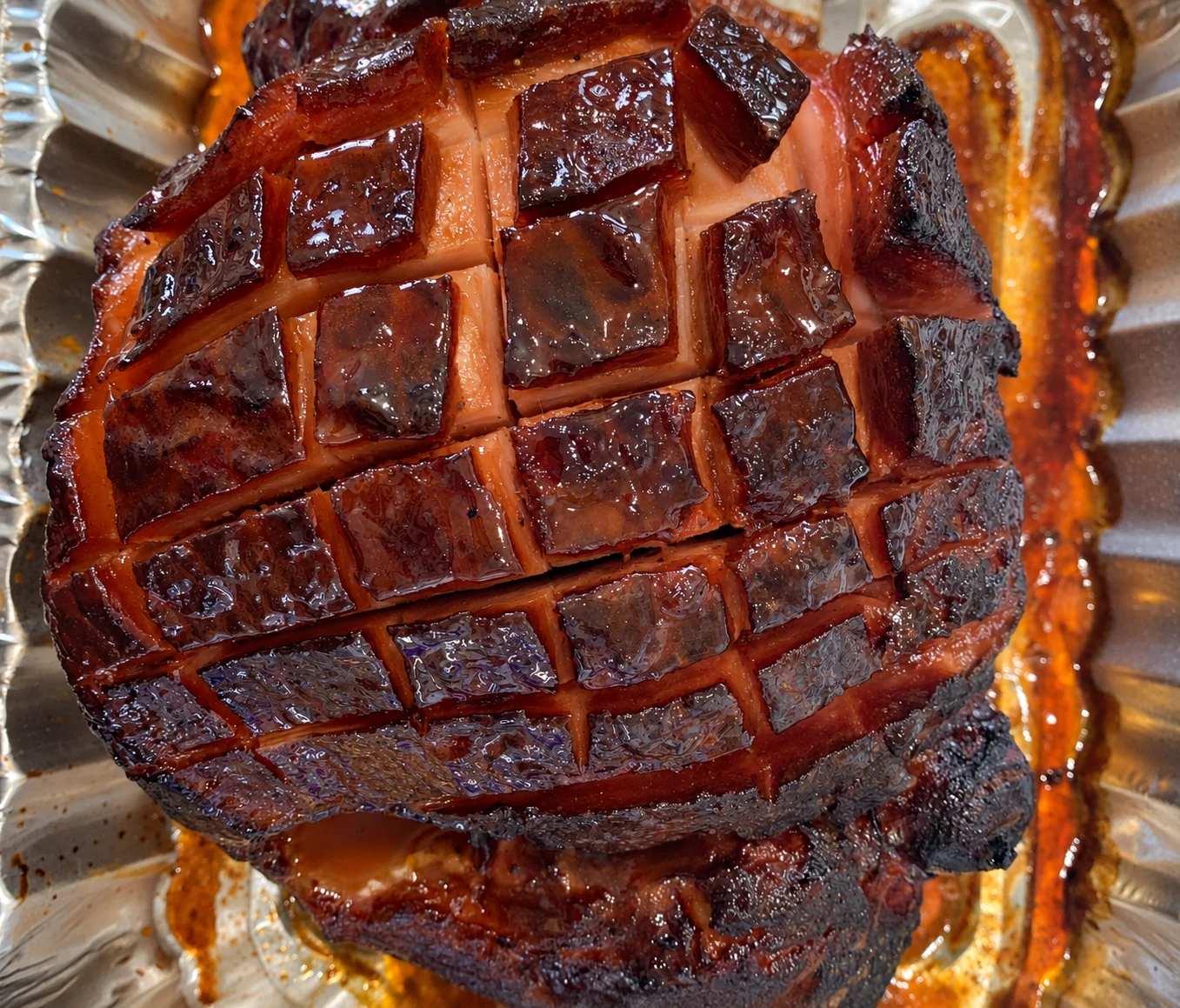
Scored smoked ham with a glossy apricot glaze in a roasting pan
PREP20 minCOOK3–4 hrREST15–20 minMAKES12–16 servings
A shareable weekend or holiday smoke

Does this cook fit your day?

About 35–40 min hands-on · 3 hr 35 min–4 hr 40 min total

Most of the time is hands-off. Allow time to brown the butter, brush on the glaze, and check temperature. Cooking time varies with ham shape and starting temperature.

Hands-on time is an estimate for the original batch, including prep and finishing. Total time includes cooking and resting. Larger batches can take longer.
First time? Start here

Read the ham label before starting. Fully cooked and cook-before-eating hams need different handling; this recipe uses fully cooked ham.

Cooking terms explained
Use the equipment you have

A Traeger or other smoker holding 325°F works well. Use a thermometer and a light-colored saucepan so you can see the butter brown. An oven also works, without added smoke.

Before you shop

Choose an 8–10 lb fully cooked bone-in ham. Pantry seasonings replace a specialty rub. One orange will often provide the zest and juice; have extra juice available for thinning.

Make it a meal

Plan on about 12–16 servings with sides. Pair with roasted potatoes, green beans, and rolls. Save extra slices for sandwiches; sides are not included in ingredient quantities.

LET’S COOK

Step-by-step instructions.

YOUR FINISH LINE140°F for fully cooked ham packaged in a USDA-inspected plant; 165°F if repackaged or leftover
  1. Preheat and check the label

    Preheat the Traeger or smoker to 325°F. Apple or cherry pellets work well. Use a fully cooked, ready-to-eat ham; this method is not for raw or cook-before-eating ham. Remove packaging and any plastic bone protector.

  2. Score and season

    Pat the ham dry. Remove any thick, leathery rind while retaining a thin layer of fat. Score a diamond pattern about ¼ inch deep and 1 inch apart without cutting deeply into the meat. Combine the ham-seasoning pepper, garlic powder, and onion powder; sprinkle over the exterior. Do not add salt.

  3. Start the smoke

    Place the ham flat-side down in a roasting pan. Pour the apple juice around it. Insert a thermometer into the thickest part, away from bone. Smoke uncovered until approximately 110–115°F internal. Add a splash of juice or water if the pan dries out. The full cook is estimated at 3–4 hours; temperature determines when it is ready.

  4. Brown the butter

    Melt the butter in a light-colored saucepan over medium-low heat. Stir as it foams, watching the milk solids. When golden brown and nutty-smelling, about 3–5 minutes, immediately remove from heat. If the solids turn black or smell bitter, start again.

  5. Build the apricot glaze

    Off the heat, carefully stir in the preserves, dark brown sugar, Dijon, vinegar, orange juice, glaze pepper, glaze garlic powder, and optional cayenne; the mixture may bubble. Return to low heat and gently simmer 5–7 minutes, stirring frequently. Remove from heat and stir in the orange zest. Thin with a splash of juice if it will not brush easily. Before brushing the ham, set aside about ⅓ cup in a clean bowl for serving.

  6. Glaze in thin layers

    At 110–115°F internal, brush the ham with a thin layer of glaze, working it into the scoring. Keep cooking at 325°F, adding another thin coat every 15–20 minutes for two or three coats as time allows. Stop when the ham reaches its safe finish temperature, even if fewer coats are applied. Loosely tent with foil if the surface darkens too quickly.

  7. Check the finish temperature

    Heat fully cooked ham packaged in a USDA-inspected plant to 140°F in the thickest part. Repackaged ham and leftover cooked ham must reach 165°F. Follow any more specific package instructions. Verify several spots without touching bone.

  8. Rest, slice, and finish

    Rest loosely tented for 15–20 minutes. Gently warm the reserved clean glaze and thin with 1–2 tablespoons orange juice. Slice the ham and spoon a little over the slices. Keep the drizzle light so the pork and smoke still come through.

TEMPERATURE NOTE

Use only fully cooked, ready-to-eat ham. Reheat ham packaged in a USDA-inspected plant to 140°F; reheat repackaged ham or leftovers to 165°F. Keep the thermometer away from bone. Reserve serving glaze before the brush touches the ham.

USDA temperature guidance
SMALL DETAILS, BETTER COOKS

A few helpful tips

Plan your cook, from prep to plate

Timing is an estimate. Follow temperature and tenderness checks.

  1. About 4½ hours before serving

    Preheat, score, season, and start warming the ham. Allow extra time if your ham heats slowly.

  2. While the ham smokes

    Brown the butter and prepare the apricot glaze.

  3. At 110–115°F internal

    Begin applying thin layers of glaze.

  4. After reaching the safe finish temperature

    Rest 15–20 minutes, then slice and drizzle.

WHEN THE COOK HAS QUESTIONS

A little help.

What makes this glaze different?

Browning the butter builds a toasted, nutty base. Apricot provides the fruit flavor, Dijon and vinegar balance sweetness, and orange zest and coarse pepper give it a bright, savory finish.

Can I use a spiral-sliced ham?

Yes, if it is fully cooked. Skip scoring and handle it gently. Spiral-cut ham can dry out faster; tent with foil if needed and begin checking its temperature early. Uncover for glazing.

Can I make it in the oven?

Yes. Use the same pan and 325°F temperature, follow the ham package instructions, and cook to the same safe internal temperature. It will not pick up additional wood smoke.

Can I prepare the glaze ahead?

Prepare it up to 3 days ahead and refrigerate in a covered container. Warm gently, stirring and adding a splash of orange juice if needed.

Why is my glaze burning?

Sugary glaze darkens quickly. Apply thin coats late in the cook, avoid hot spots, and tent with foil if it gets too dark.

MAKE TOMORROW TASTE GOOD

Keep & reheat.

Refrigerate in shallow containers within 2 hours, or within 1 hour when it’s over 90°F outside. Keep refrigerated at 40°F or below and use within 3–4 days.

Reheat

Refrigerate within 2 hours in shallow containers and use within 3–4 days, or freeze. Reheat covered with a splash of water or juice until the center reaches 165°F.

Next-day idea

Use sliced ham in mustard-and-cheddar sandwiches, dice it into breakfast potatoes, or add it to fried rice.

USDA leftover guidance
FREE MEAT TEMPERATURE CHEAT SHEET

Cook with confidence.

Keep safe cooking temperatures, rest times, and BBQ tenderness targets close at hand. Get the printable guide, plus occasional easy recipes and practical grilling tips.

Loading signup form…

READY FOR THE STORE

Your shopping list.

Check items you already have or have bought. They stay in place and are left off copied and shared lists.