Checking browser support…
Step-by-step instructions.
YOUR FINISH LINE145°F in the thickest part of the salmon
Preheat and make the lemon bed
- Preheat the smoker or pellet grill to 400°F for indirect cooking. Line a rimmed heat-safe pan with foil.
- Arrange thin lemon rounds in a slightly overlapping layer roughly the size of the salmon. Use enough to support the fillet; very thick slices can slow cooking.
Prepare the salmon
- Pat the thawed, raw salmon dry and check for pin bones. Place it skin-side down on the lemon slices, or presentation-side up if skinless.
- Season the flesh with the salt and pepper. If the tail is much thinner than the center, tuck it underneath to even out the thickness.
Add the yogurt and Parmesan crust
- Mix the Greek yogurt with the garlic powder and half the chopped parsley. Spread a thin, even layer over the top of the salmon.
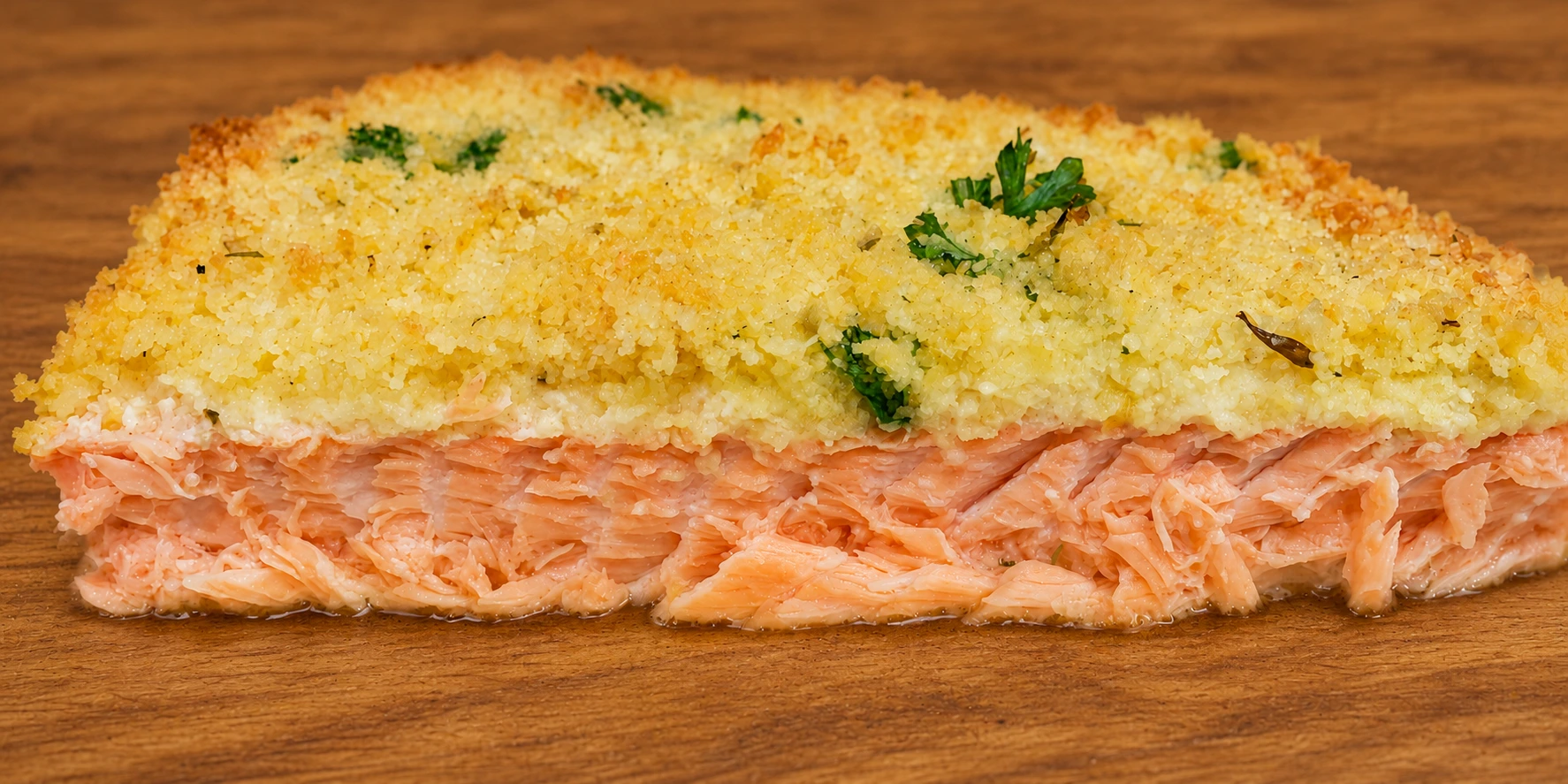
- In a separate bowl, combine the freshly grated Parmesan with the breadcrumbs. Sprinkle evenly over the yogurt and press lightly so the crust adheres. Sprinkle with the remaining parsley. Leave the topping uncovered while cooking.
Cook on the smoker
- Place the pan on the smoker over indirect heat and close the lid. Cook for about 20–30 minutes, checking from 18 minutes. A thick fillet, cool lemon bed, weather, or cooker temperature swings can extend the time.
- Insert an instant-read thermometer into the thickest part from the side, keeping the tip in the fish rather than the lemon bed. Cook to 145°F; the flesh should separate easily into flakes.
- If the topping browns too quickly, loosely tent it with foil. The crust may be lightly golden rather than deeply browned; do not overcook the salmon just to darken the cheese.
Rest and serve
- Rest for 3–5 minutes, then portion with a wide spatula. Lift each serving from the lemon bed, leaving skin behind if desired.
- Serve with vegetables, rice, or potatoes. The yogurt layer stays creamy beneath the Parmesan and breadcrumb crust.
TEMPERATURE NOTE
Cook salmon to 145°F in the thickest part. Keep raw fish refrigerated until prep, wash hands and utensils after handling it, and use a clean serving board.
USDA temperature guidance